Skip to the content
Bannock or Frying Pan Bread
Old West Frontier History of Bannock (Frying Pan Bread)
A traveler’s bread carried across continents and perfected on the American frontier
Bannock — often called frying pan bread on the frontier — was one of the most reliable foods a traveler could make with almost nothing. Its story stretches back centuries: Scottish fur traders brought their version of bannock to North America, while Indigenous peoples across the continent already had their own
ash‑baked and stone‑baked breads made from cornmeal, roots, and wild grains. When these traditions met, the result was a rugged, dependable bread that fed trappers, pioneers, cowboys, and prospectors alike.
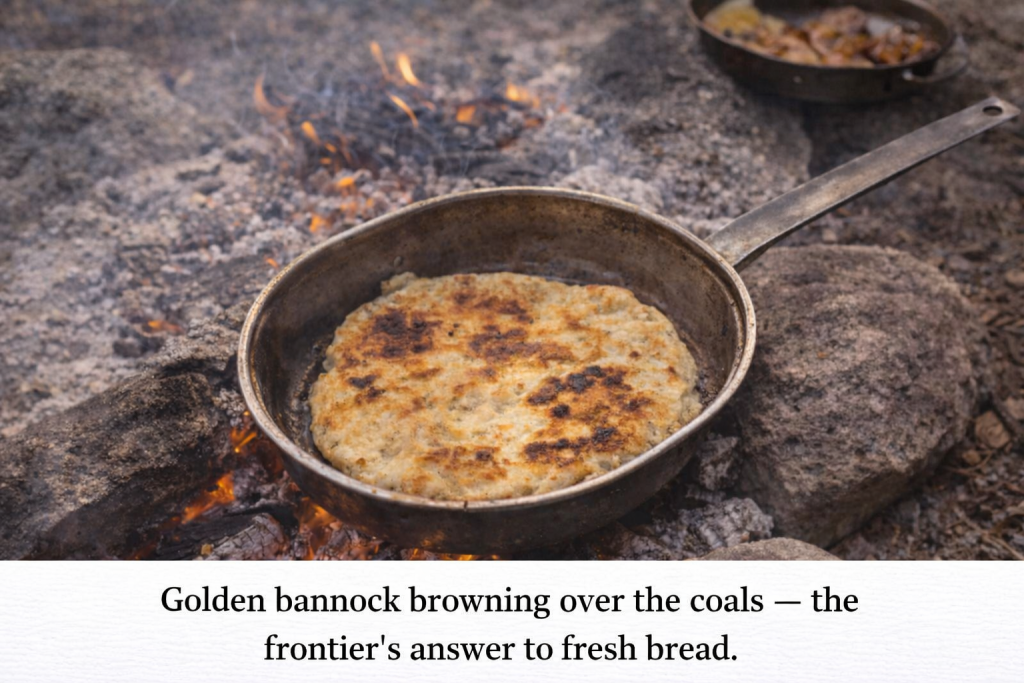
By the mid‑1800s, bannock had become a staple of the American West. It didn’t need yeast, an oven, or special tools — just flour, salt, water, and a bit of fat. Frontier cooks mixed the dough in a tin bowl, shaped it into a thick cake, and cooked it in a greased skillet over coals or propped beside the fire. Some called it trail bread, some called it bannock, but everyone agreed it was quick, filling, and hard to mess up.
Cowboys ate it with beans, hunters paired it with salt pork, and families on the move relied on it when supplies were low. Bannock was the frontier’s answer to fresh bread — humble, hearty, and always welcome after a long day on the trail.
Frying Pan Bread Recipe [also called Bannock]
Ingredients:
1 cup flour
1 tsp. baking powder
1/4 tsp. salt
Water
Instructions:
Thoroughly mix dry ingredients. Add just enough cold water to make a stiff dough. [something under ½ cup for me]. Now let the dough rest while you heat up your skillet to medium, then add a little butter or bacon fat so the bread doesn’t stick.
Working dough as little as possible, form a 1-inch thick cake. Lay the cake on a greased, pre-warmed skillet. Brown the bottom of the cake lightly and flip or turn with a spatula to brown the other side. When both sides are lightly browned, prop the skillet in front of the fire [or slide it into a 375-400 degree oven] and let it bake [for 10-15 minutes]. Test for doneness by thumping the cake with a spoon handle or stick. A hollow ringing sound indicates doneness. An alternative test is to jab the cake with a twig or matchstick. If the twig comes out clean (no clinging dough), the cake is done.
Translate »