History of Old West Frontier Beef Jerky —
“Trail Meat That Never Quit”
Long before cowboys rode the great cattle trails, the Native tribes of the Plains had already perfected the art of drying meat. Buffalo, elk, and deer were sliced thin, salted, and dried in the sun or over low smoke until the strips became light, tough, and nearly impossible to spoil. This technique — simple, reliable, and brilliant — became the backbone of frontier survival.
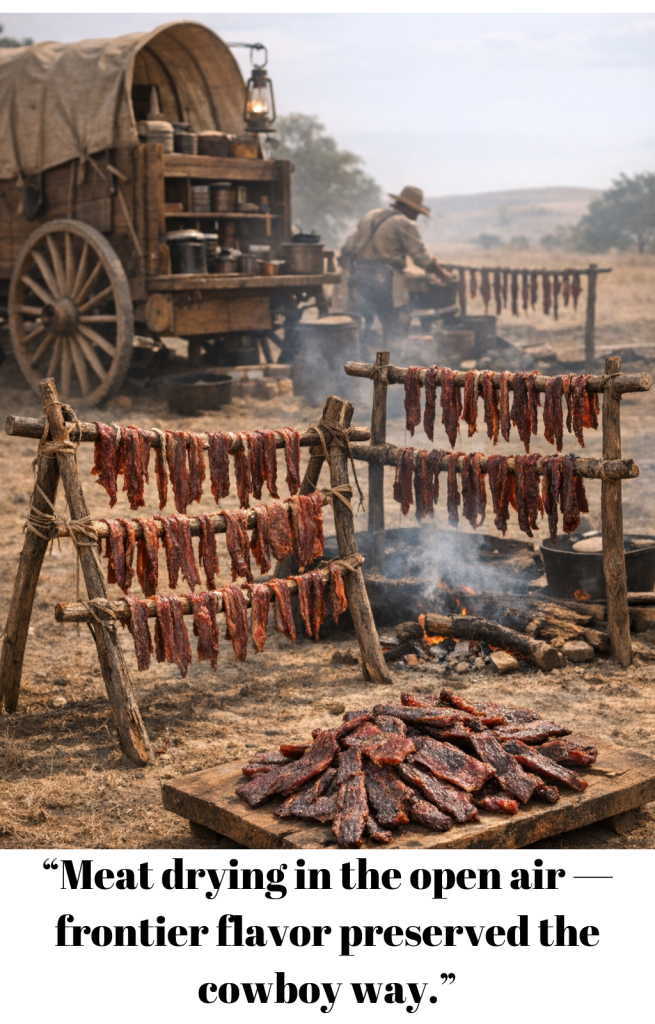
When the post–Civil War cattle drives began, cowboys adopted the same method for beef. A steer butchered on the trail left nothing wasted: the prime cuts went to supper, the organs fed the dogs, and the leanest strips were turned into jerky. The cook would slice the meat thin, rub it with salt and pepper, and hang it on rawhide racks beside the chuckwagon. If the
weather was clear, the sun did the drying. If flies were thick or storms threatened, the cook built a small mesquite fire and let the smoke do the work.
Jerky was more than food — it was trail insurance. It didn’t rot, didn’t leak, didn’t spill, and didn’t weigh much. Cowboys chewed it straight from their saddle bags, pounded it into shreds for quick meals, or boiled it into stews when the night was cold and the herd was restless. A good batch of jerky could last weeks, even months, and it kept a rider going when fresh beef wasn’t an option.
Old West Frontier Beef Jerky Recipe